ELDAC Home Care App
Flinders University
The Challenge
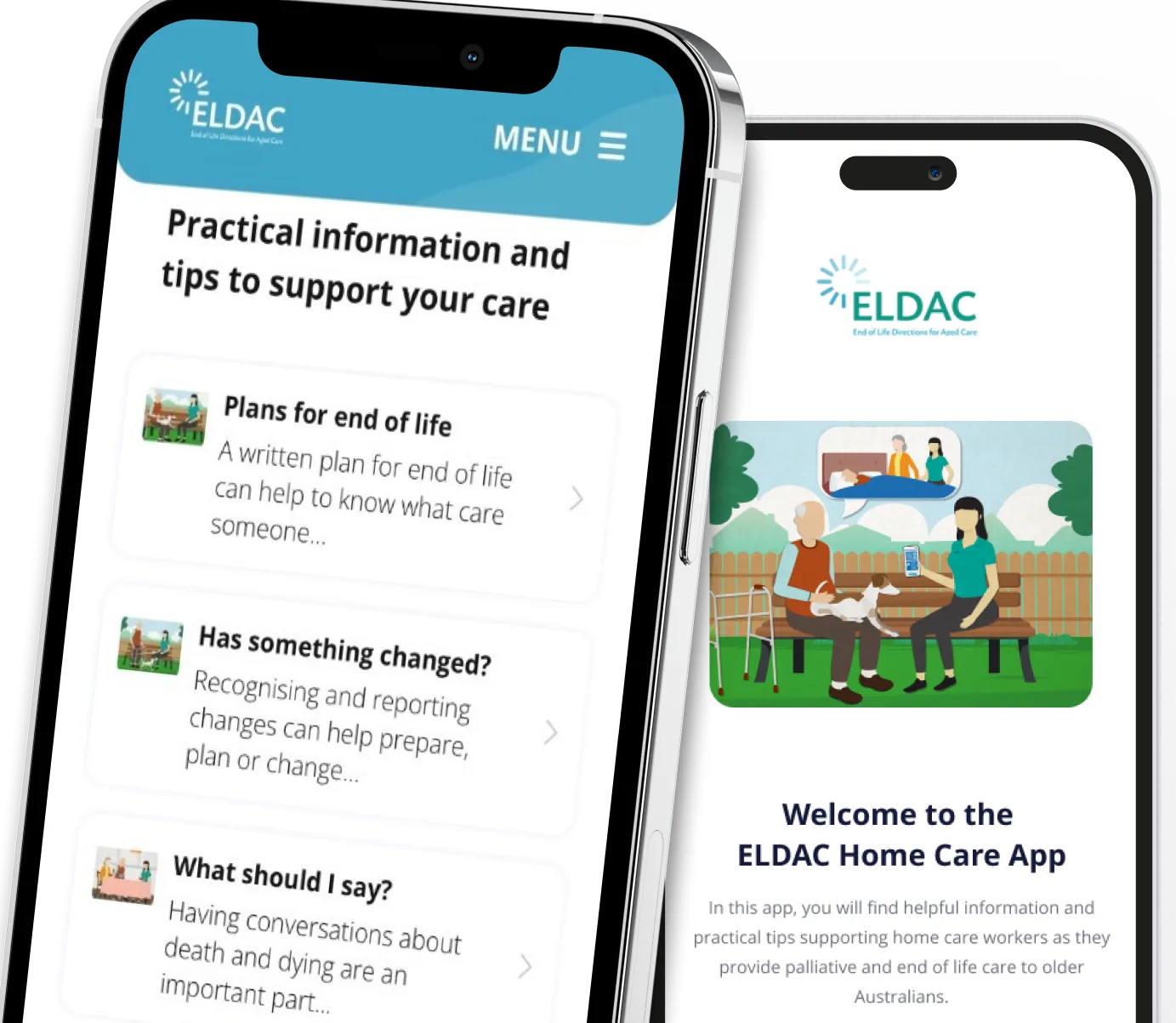
Access to free evidence-informed information for palliative care is limited and lacking the support on person-centred decision-making and the transition to palliative care. Health professionals, families and general community are struggling to access palliative care information from trusted sources.
The challenge was to create a mobile app that address the gaps in palliative care practices among home care workers for aging Australians involves providing targeted training, evidence-based resources, and fostering collaboration to enhance caregivers' skills and knowledge, ensuring comprehensive and compassionate end-of-life care at home.
Impact
What did Kiratech do for ELDAC Home Care App?
Freely accessible
No cost for users, enhancing accessibility
Practical support
Offers tangible aid for care scenarios
Quality care
Improves end-of-life care quality
Resources-rich
Packed with information and resources
Evidence-based
Utilises an evidence-based care model
User-evaluation
Design informed by user feedback for usability
How did Kiratech empower the Innovator & Researcher?

Research Centre for Palliative Care, Death and Dying (RePaDD) within Flinders University wants to make a difference to care at the end of life.
Flinders University engaged with us on Production service to develop CareSearchGP in response to Australia's evolving death demographics, where most people succumb to chronic conditions and express a preference for dying at home. Despite this, a small fraction achieves it. Given that most deaths can be anticipated, our solution will facilitate proactive planning and care delivery with GPs.
Other works
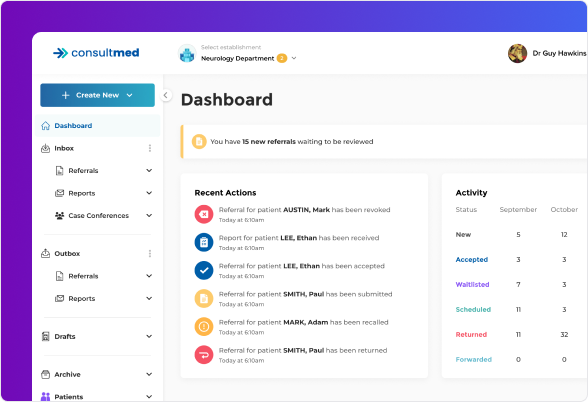
a ‘whole of healthcare visibility and communications’ system that utilise AI and machine learning. Clinical workflows were then replaced, removing manual touchpoints with automation, creating a holistic clinical experience from start to end
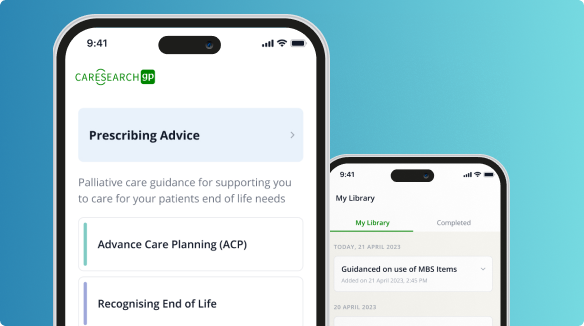
A mobile app that supports GPs in administering care for patients requiring a palliative approach, addressing the gap between patient preferences and actual end-of-life care locations.